
 Français
  Deutsch
  Español
  Italiano
  Nederlands
  Português
  Brasileiro
  Ελληνικά
  Polski
  Română
  Svenska
  Türkçe
  Български
  हिंदी
हिंदी 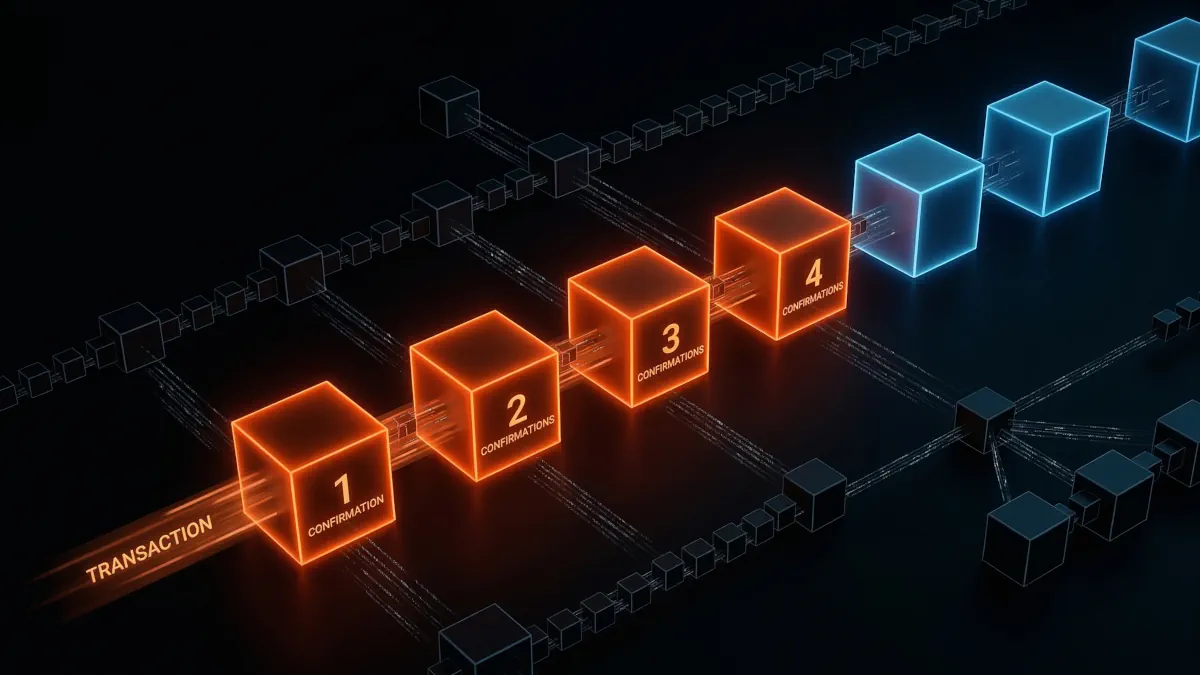
What Are Blockchain Confirmations?
Understanding why blockchain confirmations are required for crypto payments.
Novaxbet Editorial •2026-03-28•4 min read
When using cryptocurrency, every transaction involves a fee. These fees are not charged by a central authority but are an integral part of how blockchain networks function.
Crypto transaction fees serve as an incentive mechanism for validators or miners to process and include transactions in blocks.
Understanding how these fees work is essential for predicting transaction speed, cost, and network behavior.
What Are Crypto Transaction Fees
Next reading
A crypto transaction fee is the cost paid to the network to process a transaction.
It is not a service fee from a platform.
Instead, it compensates the participants who validate and secure the network.
Depending on the blockchain, these participants may be:
- miners (Proof of Work systems)
- validators (Proof of Stake systems)
Fees ensure that transactions are processed and prioritized.
Why Fees Exist
Fees serve several critical purposes:
Network Security
They incentivize validators to maintain the network.
Spam Prevention
They discourage excessive or malicious transactions.
Transaction Prioritization
They determine which transactions are processed first.
Without fees, blockchain networks would become inefficient or vulnerable.
How Fees Are Calculated
Transaction fees are not fixed.
They depend on several factors:
- network demand
- transaction size (data)
- complexity of the operation
- fee model of the blockchain
Example:
| Factor | Impact |
|---|---|
| High demand | Higher fees |
| Low demand | Lower fees |
| Large transaction | Higher cost |
Each blockchain uses its own fee calculation method.
Fee Models Across Blockchains
Different blockchains implement different fee structures.
Bitcoin Model
- based on transaction size (bytes)
- users set fee rate (sats/vByte)
Ethereum Model
- based on gas units
- includes base fee + priority fee
Other Networks
- fixed or near-fixed fees (e.g., Solana, Tron)
- dynamic but lower-cost structures
Understanding the model is key to predicting costs.
Gas Fees Explained
In networks like Ethereum, fees are measured in gas.
Gas represents computational effort.
Each action requires a certain amount of gas.
Example:
- simple transfer → low gas
- smart contract interaction → higher gas
Total fee = gas used × gas price
Gas pricing fluctuates based on demand.
Mempool and Fee Competition
Transactions enter a waiting area called the mempool.
Validators select transactions based on fees.
Higher fee → higher priority
Lower fee → longer wait
This creates a competitive market for block space.
Users effectively bid for inclusion.
Fee Impact on Transaction Speed
Fees directly influence confirmation time.
| Fee Level | Expected Speed |
|---|---|
| High | Fast confirmation |
| Medium | Normal processing |
| Low | Delayed |
Setting the right fee is a trade-off between cost and speed.
Platform vs Network Fees
It is important to distinguish:
Network Fees
- paid to blockchain validators
- unavoidable
Platform Fees
- charged by exchanges or services
- may include withdrawal fees
Users often confuse these two.
They serve different purposes.
Dynamic Fee Environments
Fees are constantly changing.
They increase during:
- high market activity
- NFT launches
- major events
They decrease during:
- low activity
- off-peak hours
Timing transactions can reduce costs.
Fee Optimization Strategies
Users can manage fees with simple strategies:
- transact during low congestion
- adjust fee settings manually
- use layer 2 solutions
- choose lower-cost networks
Optimization improves efficiency without compromising reliability.
Common Fee Misconceptions
Misunderstandings include:
"Fees go to the platform"
False — they go to the network.
"Higher fee is always required"
Not always — depends on urgency.
"Fees are fixed"
Incorrect — they are dynamic.
Understanding these points avoids confusion.
Fees as a Core Mechanism
Fees are not optional.
They are a fundamental component of blockchain design.
They ensure:
- security
- fairness
- efficiency
Without fees, decentralized systems cannot function properly.
Understanding Transaction Costs
Crypto fees reflect real-time network conditions.
They are:
- dynamic
- competitive
- necessary
Instead of asking:
“Why is the fee high?”
A better question is:
“What is the network demand right now?”
Understanding this gives full clarity.
Fees are not arbitrary.
They are the price of decentralized computation.